





Sometimes transformation begins not with a new idea, but with a new question.
When Dan Sandford-Smith first began community youth work in Hodge Hill with Worth Unlimited Birmingham over 15 years ago, he says he carried assumptions that felt normal at the time.
Dan is an experienced youth worker with over 20 years of frontline work supporting young people often on the margins and – like many youth workers – he had inherited models focused on programmes, projects and quick, measurable outcomes. He was encouraged to engage young people — especially those described as hard to reach, disadvantaged, marginalised or at risk. Success was often measured through attendance, behaviour change or reduced anti-social behaviour.
Dan takes up the story …
I cared deeply about the young people I was working with and wanted to see change. But looking back, I realise I was often approaching youth and community work through a deficit lens: starting with problems to solve rather than people and gifts to discover.
The question that changed everything
The turning point came when someone outside our organisation asked a simple but unsettling question:
“Imagine a young person reading one of your funding applications. How would they feel about the way they are described?”
At first, it felt uncomfortable. Our bids and reports often described young people through absence and need — low confidence, low aspiration, poor outcomes, anti-social behaviour, risk. Those descriptions helped explain need and secure support, but the question stayed with me.
What if the story we were telling wasn’t the whole story?
That outside challenge led to internal reflection and eventually changed how we worked. It encouraged us to ask a different question of both our work and the young people we cared so much about:
- Not: “What is wrong?”
- But: “What is STRONG?”
That shift changed more than our language — it changed our posture.
Discovering an asset-based approach
We began exploring Asset-Based Community Development (ABCD), moving from seeing young people as consumers of programmes to recognising them as contributors to community life.
Instead of building for young people, we started building with them. We stopped assuming youth workers had to provide everything and started becoming what we sometimes call “alongsiders” — people who notice, connect and create space for gifts and skills to emerge.
One moment captures this change for me.
Barbara’s Garden: a different kind of transformation
As part of a youth-led social action project, we had been asked if a group of young people could help clear leaves from the garden of an elderly resident called Barbara. It was cold and, if I’m honest, enthusiasm was limited by myself and the young people. The young people came along, but initially it felt like just another activity to complete.
Then Barbara came outside. She welcomed the young people, talked with them and shared some of her story. She told them about being evacuated during the war and spoke about her husband, who had always done the gardening but was no longer around.
The atmosphere shifted. What had started as a practical task became something much deeper. The young people weren’t simply delivering an act of service — they were building a relationship. They began to realise that something they often took for granted — their youth, energy and willingness — had genuine value to somebody else.
Barbara wasn’t simply receiving help. She was offering hospitality, stories and connection. By the end, the garden looked different — but more importantly, so did the young people, and so did I.
Lessons for community builders
We experienced something we’ve continued to see again and again: contribution creates transformation. Young people grow when they discover they are needed. Since then, I’ve become increasingly convinced that communities already contain extraordinary treasure.
Young people carry creativity, leadership, practical skills, hospitality and lived experience. Around them are neighbours, elders, families and local networks with wisdom, opportunities and stories to share.
As we created opportunities for these gifts to connect, young people moved from attending activities to genuinely shaping them. Adults became facilitators rather than controllers. Community stopped being something delivered and became something created and shared together.
What struck me most was that transformation didn’t begin when young people participated more. It began when they felt they belonged.
That experience has left me with a few convictions: gifts matter more than gaps; belonging often comes before participation; contribution changes people; and intergenerational community matters.
For me, community building has become less about creating programmes and more about helping people discover that they already have something meaningful to bring.
GROWING GOOD: YOUTH
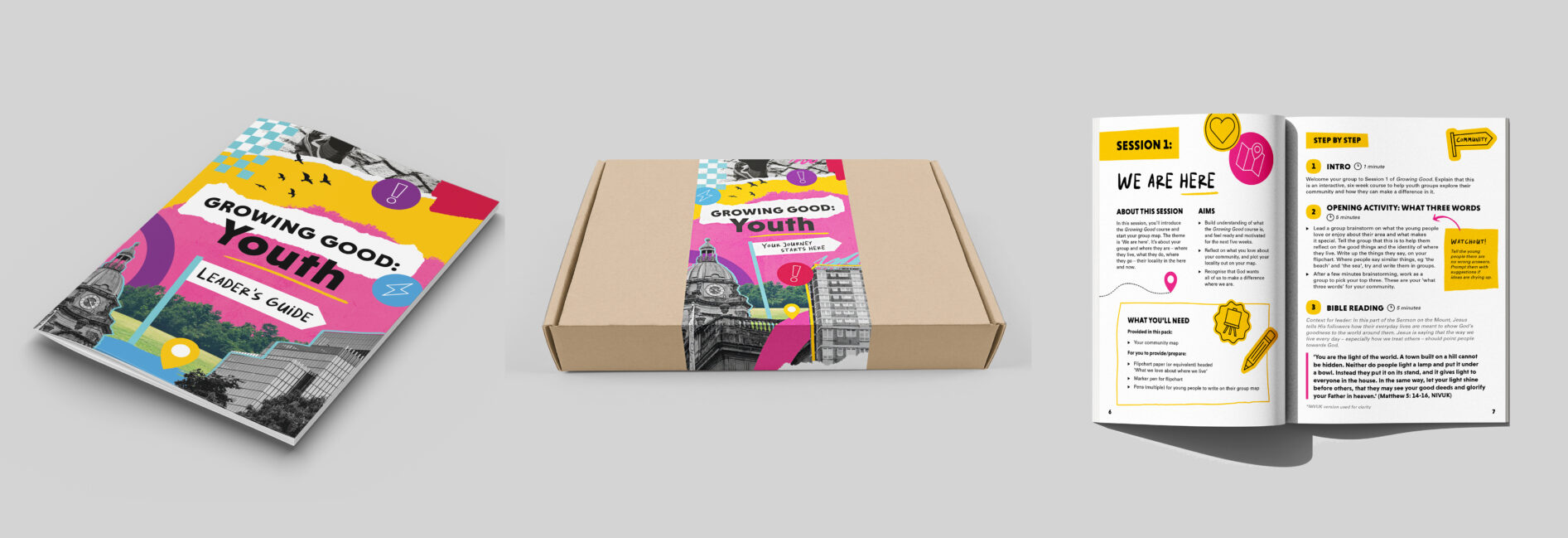
Growing Good: Youth is a brand-new, six-week resource helping young people grow as disciples of Jesus, connect with their local community and make a difference where they are.
Adapted from the popular Growing Good course for adults, this fun and practical resource takes youth groups on a journey from discovery to action. Across six engaging sessions, young people will explore their local community, reflect on the Bible, pray together, identify challenges and plan a project that can make a real difference.
Each session includes:
• games and activities
• Bible reflection
• discussion
• action-planning and prayer.
The resource is easy to use, fully explained and designed to help youth leaders run meaningful sessions with confidence.
Created for youth groups aged 14 to 18, Growing Good: Youth helps young people deepen their faith, build confidence, work together and discover how God can use them to bring hope and change in their community.
ORDER YOUR PACK________________________________________________
The Church Urban Fund (CUF) is an English charity set up by the Church of England to tackle poverty. While historically Anglican, CUF now supports various Catholic projects, including community hubs like the Place of Welcome at St Ambrose Barlow Catholic Church in Birmingham as well as providing resources for Catholic-led social justice programmes.
Sometimes transformation begins not with a new idea, but with a new question.
When Dan Sandford-Smith first began community youth work in Hodge Hill with Worth Unlimited Birmingham over 15 years ago, he says he carried assumptions that felt normal at the time.
Dan is an experienced youth worker with over 20 years of frontline work supporting young people often on the margins and – like many youth workers – he had inherited models focused on programmes, projects and quick, measurable outcomes. He was encouraged to engage young people — especially those described as hard to reach, disadvantaged, marginalised or at risk. Success was often measured through attendance, behaviour change or reduced anti-social behaviour.
Dan takes up the story …
I cared deeply about the young people I was working with and wanted to see change. But looking back, I realise I was often approaching youth and community work through a deficit lens: starting with problems to solve rather than people and gifts to discover.
The question that changed everything
The turning point came when someone outside our organisation asked a simple but unsettling question:
“Imagine a young person reading one of your funding applications. How would they feel about the way they are described?”
At first, it felt uncomfortable. Our bids and reports often described young people through absence and need — low confidence, low aspiration, poor outcomes, anti-social behaviour, risk. Those descriptions helped explain need and secure support, but the question stayed with me.
What if the story we were telling wasn’t the whole story?
That outside challenge led to internal reflection and eventually changed how we worked. It encouraged us to ask a different question of both our work and the young people we cared so much about:
- Not: “What is wrong?”
- But: “What is STRONG?”
That shift changed more than our language — it changed our posture.
Discovering an asset-based approach
We began exploring Asset-Based Community Development (ABCD), moving from seeing young people as consumers of programmes to recognising them as contributors to community life.
Instead of building for young people, we started building with them. We stopped assuming youth workers had to provide everything and started becoming what we sometimes call “alongsiders” — people who notice, connect and create space for gifts and skills to emerge.
One moment captures this change for me.
Barbara’s Garden: a different kind of transformation
As part of a youth-led social action project, we had been asked if a group of young people could help clear leaves from the garden of an elderly resident called Barbara. It was cold and, if I’m honest, enthusiasm was limited by myself and the young people. The young people came along, but initially it felt like just another activity to complete.
Then Barbara came outside. She welcomed the young people, talked with them and shared some of her story. She told them about being evacuated during the war and spoke about her husband, who had always done the gardening but was no longer around.
The atmosphere shifted. What had started as a practical task became something much deeper. The young people weren’t simply delivering an act of service — they were building a relationship. They began to realise that something they often took for granted — their youth, energy and willingness — had genuine value to somebody else.
Barbara wasn’t simply receiving help. She was offering hospitality, stories and connection. By the end, the garden looked different — but more importantly, so did the young people, and so did I.
Lessons for community builders
We experienced something we’ve continued to see again and again: contribution creates transformation. Young people grow when they discover they are needed. Since then, I’ve become increasingly convinced that communities already contain extraordinary treasure.
Young people carry creativity, leadership, practical skills, hospitality and lived experience. Around them are neighbours, elders, families and local networks with wisdom, opportunities and stories to share.
As we created opportunities for these gifts to connect, young people moved from attending activities to genuinely shaping them. Adults became facilitators rather than controllers. Community stopped being something delivered and became something created and shared together.
What struck me most was that transformation didn’t begin when young people participated more. It began when they felt they belonged.
That experience has left me with a few convictions: gifts matter more than gaps; belonging often comes before participation; contribution changes people; and intergenerational community matters.
For me, community building has become less about creating programmes and more about helping people discover that they already have something meaningful to bring.
GROWING GOOD: YOUTH
Growing Good: Youth is a brand-new, six-week resource helping young people grow as disciples of Jesus, connect with their local community and make a difference where they are.
Adapted from the popular Growing Good course for adults, this fun and practical resource takes youth groups on a journey from discovery to action. Across six engaging sessions, young people will explore their local community, reflect on the Bible, pray together, identify challenges and plan a project that can make a real difference.
Each session includes:
• games and activities
• Bible reflection
• discussion
• action-planning and prayer.
The resource is easy to use, fully explained and designed to help youth leaders run meaningful sessions with confidence.
Created for youth groups aged 14 to 18, Growing Good: Youth helps young people deepen their faith, build confidence, work together and discover how God can use them to bring hope and change in their community.
ORDER YOUR PACK________________________________________________
The Church Urban Fund (CUF) is an English charity set up by the Church of England to tackle poverty. While historically Anglican, CUF now supports various Catholic projects, including community hubs like the Place of Welcome at St Ambrose Barlow Catholic Church in Birmingham as well as providing resources for Catholic-led social justice programmes.