






Sorry, no records were found. Please adjust your search criteria and try again.
Sorry, unable to load the Maps API.
Occasionally, there are moments when the language of diplomacy seems inadequate. Pope Leo XIV found more ancient words when news reached him of the deaths of Maysa Khader Ibrahim Abu Daoud and her daughter, Mary Hafez Michel Najjar, two Greek Orthodox Christians killed in an Israeli air strike in Gaza City last Saturday.
Writing to Fr Gabriel Romanelli, parish priest of Holy Family Catholic Church in Gaza, Leo assured the community of his prayers, but went on to pose the question – drawn from the language of the Psalms – “How long, O Lord?”
The original was intended as a prayer of lament, but, as Leo knows only too well, it is the question currently hanging over the entire Holy Land. The fear and distress run deep on both sides of the divide – how long can Israelis live with the trauma of terrorism and the fear that another 7th October could happen, and how long can Palestinians live amid occupation, displacement and the utter obliteration of their homeland?
Beyond such human desperation and anxiety, the more political question is: how long will it be before political leaders discover that military superiority cannot by itself create peace?
Questions such as these have particular poignancy and urgency today, 7th October, the third anniversary of the appalling Hamas-led assault on southern Israel. On 7th October 2023, Hamas and other militants crossed into Israel, killing some 1,200 people with uniquely savage brutality and taking 251 hostages. Whole families were murdered in their own homes and young people were killed at the Nova music festival. By far, it was the deadliest day in Israel’s already wounded history, and today – three years on – families and survivors have again gathered at places such as Kfar Aza and the festival site to remember the dead.
In the light of current preoccupations with Gaza and the plight of the Palestinian people, it has become all too common to diminish the crimes of 7th October, but we cannot minimise those crimes because of what followed them. The deliberate killing of civilians remains wrong, and no history of injustice can make the murder of innocent people morally good.
Cardinal Pierbattista Pizzaballa, Latin Patriarch of Jerusalem, made precisely this point shortly after the attacks when he said that what happened in southern Israel on 7th October was “in no way permissible”.
But the moral sentence cannot end there. The Israeli military response has inflicted catastrophic suffering upon Gaza, with more than 74,000 Palestinians reported killed since the beginning of the war, according to Gaza’s Health Ministry, whose overall figures are regarded as generally reliable by UN agencies and independent experts (although its totals do not distinguish civilians from combatants).
Much of Gaza has been devastated and enormous numbers of people have been displaced. Even after the October 2025 ceasefire reduced the intensity of the war, Palestinians have continued to be killed and humanitarian conditions in the region remain desperate.
The Pope’s comments came because the killing has not ended, and it needs to.
Every human life possesses a dignity that precedes nationality, religion and politics. The Israeli child murdered on 7th October and the Palestinian child killed beneath the rubble of Gaza do not possess competing degrees of human worth – they are both children of God and deserve an equal measure of dignity, peace and hope for their future.
This may sound like so much obvious humanitarianism, but in the circumstances of war it becomes a particular challenge, because the essence of the prosecution of war is that combatants cease to see the humanity in the person whom they are facing – thus ‘Palestinian’ becomes synonymous with Hamas and ‘Israeli’ becomes synonymous with the actions of the Israeli government.
Once people become categories rather than faces, almost anything can be justified, and that’s why Catholic teaching so resolutely refuses to accept that reductionism, and why so many other people share our position on this.
This week’s extraordinary vote by the Green Party of England and Wales demonstrated just how deeply the Middle East conflict is also dividing political life in Britain. At its conference, the party voted by 1,022 votes to 813 to adopt an explicitly anti-Zionist policy, with the motion defining Zionism as an ethnonationalist political project that the party now says must be opposed as a form of racism. (The vote also endorsed a single democratic state across historic Palestine rather than the two-state settlement traditionally pursued by international diplomacy.)
Whilst the intention was to ‘call out’ the actions of fundamentalist Zionists who are committed to the destruction of Palestine, the vote caused profound alarm among many Jews, including within the Green movement itself. Prior to the conference, Jewish Greens pointed out that Zionism has different meanings to different Jews and that treating all its forms as equivalent to support for the actions of the Israeli state risked discrimination against Jewish members. That said, there were also some Jewish members of the Green Party who supported the motion.
Whilst many figures within the British political establishment and media swooped in to condemn the decision, the ensuing firestorm of commentary has served to ignite public debate and discussion about the crisis in Gaza and the West Bank – a conflict about which public understanding is limited, if not distorted and misinformed.
Taking sides is always an easy option when it comes to challenging crises; recognising, acknowledging and attempting to reconcile conflicting grievances is a lot harder – but it is really the only way to peace.
So, in terms of the Middle East crisis, room has to be given for the strongest criticism of the Israeli government’s conduct, of settlement expansion, occupation, displacement and the suffering the masters of the state have inflicted upon Palestinians. But this must be framed in terms of blaming only those responsible; there is no vicarious guilt on the part of the innocent population of Israel, and separating the perpetrators from those just trying to live their lives in peace is a fundamental starting point in any arbitration.
In a similar context, though, the label ‘Zionist’ should not become a convenient synonym for someone whose suffering need not be heard.
Zionism itself has contained competing political, religious and cultural traditions, and for many Jews it signifies, at its simplest, the conviction that the Jewish people, after centuries of persecution culminating in the Holocaust, have a right to national self-determination and security.
This argument, however, stops at the forceful invasion of someone else’s land and the oppression and subjugation of its people, who also have human rights – and for most Palestinians, the experienced historical reality associated with the creation and expansion of Israel means dispossession, exile and military occupation.
Any politics capable of achieving peace has to be able to hear both these troubled histories with equal attention – condemning antisemitism does not require silence about Palestinian suffering, and defending Palestinian rights does not require denying Jewish history, identity or vulnerability.
Peace only begins when we stop demanding that one people’s tears invalidate another’s.
So how might peace in the Middle East ever be achieved, when so much bitterness, loss and animosity has accumulated on both sides?
Pope Leo has repeatedly supported a two-state solution. In August he appealed to the international community to advance it as the path towards “a just and lasting peace”, and the Holy See has likewise described two states as the institutional framework capable of addressing the legitimate aspirations of both Palestinians and Israelis.
That means a viable Palestinian state cannot remain permanently theoretical: endlessly promised while settlements, fragmentation and violence make its realisation progressively more difficult. It also means Israel must be able to exist in genuine security, as no peace settlement can be built upon the expectation that Israeli civilians should simply accept terrorism, rockets or massacres as the price of geography.
Palestinian freedom and Israeli security may seem like profound opposites, but, seen from an impartial perspective, they are not necessarily mutually exclusive objectives.
Whilst decades of conflict mean that neither party can see its own way out of the problem, it must nevertheless be obvious that there can be no lasting Israeli security built upon permanent Palestinian despair, whilst neither can there be Palestinian liberation built upon the murder or expulsion of Israelis. If these points are obvious, the decisions they demand if peace is to be found are tough, to say the least, and would require immense political courage on all fronts. Primarily, it would require the protection of civilians and full humanitarian access; an end to terrorism and hostage-taking; Palestinian self-government free from domination by armed groups; an end to policies that entrench occupation and dispossession; security guarantees for Israel and the reconstruction of Gaza – all backup by sustained international diplomacy capable of turning two states from a slogan into political reality.
If those are just the obvious pillars of a lasting peace in the Middle East, they’re also stark indicators of how difficult it will be to bring peace to those trying to live in this region.
From the Catholic perspective, Pope Leo has given the Church a particularly powerful expression for its vocation: an “unarmed and disarming” peace – “unarmed” because it refuses to place ultimate faith in violence, and “disarming” because it attempts something harder – the removal of the fear, humiliation and hatred from which tomorrow’s violence will otherwise emerge.
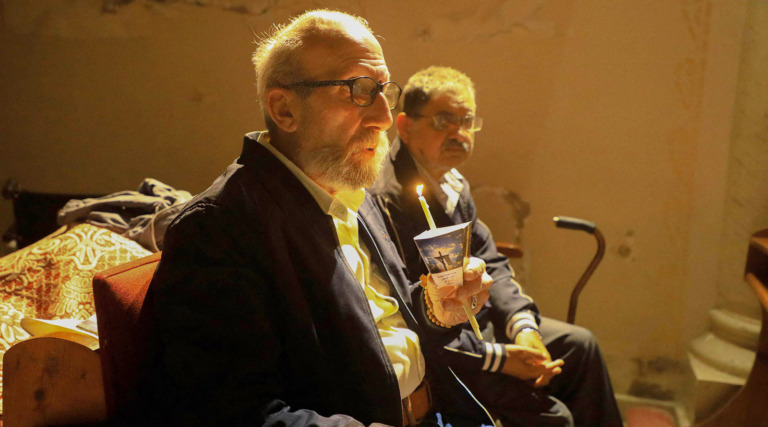
This is why the parish of the Holy Family in Gaza is of such profound significance – both to Pope Leo personally and to the wider world. Despite everything that surrounds them, Holy Family parish has continued serving displaced people and providing hope and refuge to anyone who comes through its doors.
Cardinal Pizzaballa has described Catholic and other Christian hospitals, schools, shelters and parishes in Gaza as places of service for Christians, Muslims, refugees, children, believers and non-believers alike, and most recently he described the reopening of the little parish school as a declaration that the community was beginning again and refusing to surrender to despair.
Perhaps that is where the answer to Pope Leo’s question begins. “How long, O Lord?” cannot be answered by another military offensive, another act of terrorism or another generation taught to inherit the fears and hatreds of the last. It can only be answered when the conviction that violence will ultimately deliver security gives way to the much more demanding work of peace.
For Christians, such hope is not naïve optimism. The Gospel does not ask us to pretend that evil, injustice or legitimate grievances do not exist; rather, it asks us to resist the temptation to answer one injustice with another, and to recognise the image of God even in those whom history, politics and war have taught us to regard as enemies.
That is the quiet witness being offered by Holy Family parish in Gaza. Amid devastation, its doors remain open; amid despair, children are returning to school; amid division, Christians continue to serve whoever needs their help. Such acts will not themselves settle borders or negotiate treaties, but they reveal the kind of peace for which politics must ultimately make room.
Three years after the horror of 7th October, Israelis and Palestinians have surely buried enough of their children. The time has come for an unarmed and disarming peace – and for the world to find the courage to pursue it.
Joseph Kelly is a Catholic writer and public theologian
Sorry, no records were found. Please adjust your search criteria and try again.
Sorry, unable to load the Maps API.
Occasionally, there are moments when the language of diplomacy seems inadequate. Pope Leo XIV found more ancient words when news reached him of the deaths of Maysa Khader Ibrahim Abu Daoud and her daughter, Mary Hafez Michel Najjar, two Greek Orthodox Christians killed in an Israeli air strike in Gaza City last Saturday.
Writing to Fr Gabriel Romanelli, parish priest of Holy Family Catholic Church in Gaza, Leo assured the community of his prayers, but went on to pose the question – drawn from the language of the Psalms – “How long, O Lord?”
The original was intended as a prayer of lament, but, as Leo knows only too well, it is the question currently hanging over the entire Holy Land. The fear and distress run deep on both sides of the divide – how long can Israelis live with the trauma of terrorism and the fear that another 7th October could happen, and how long can Palestinians live amid occupation, displacement and the utter obliteration of their homeland?
Beyond such human desperation and anxiety, the more political question is: how long will it be before political leaders discover that military superiority cannot by itself create peace?
Questions such as these have particular poignancy and urgency today, 7th October, the third anniversary of the appalling Hamas-led assault on southern Israel. On 7th October 2023, Hamas and other militants crossed into Israel, killing some 1,200 people with uniquely savage brutality and taking 251 hostages. Whole families were murdered in their own homes and young people were killed at the Nova music festival. By far, it was the deadliest day in Israel’s already wounded history, and today – three years on – families and survivors have again gathered at places such as Kfar Aza and the festival site to remember the dead.
In the light of current preoccupations with Gaza and the plight of the Palestinian people, it has become all too common to diminish the crimes of 7th October, but we cannot minimise those crimes because of what followed them. The deliberate killing of civilians remains wrong, and no history of injustice can make the murder of innocent people morally good.
Cardinal Pierbattista Pizzaballa, Latin Patriarch of Jerusalem, made precisely this point shortly after the attacks when he said that what happened in southern Israel on 7th October was “in no way permissible”.
But the moral sentence cannot end there. The Israeli military response has inflicted catastrophic suffering upon Gaza, with more than 74,000 Palestinians reported killed since the beginning of the war, according to Gaza’s Health Ministry, whose overall figures are regarded as generally reliable by UN agencies and independent experts (although its totals do not distinguish civilians from combatants).
Much of Gaza has been devastated and enormous numbers of people have been displaced. Even after the October 2025 ceasefire reduced the intensity of the war, Palestinians have continued to be killed and humanitarian conditions in the region remain desperate.
The Pope’s comments came because the killing has not ended, and it needs to.
Every human life possesses a dignity that precedes nationality, religion and politics. The Israeli child murdered on 7th October and the Palestinian child killed beneath the rubble of Gaza do not possess competing degrees of human worth – they are both children of God and deserve an equal measure of dignity, peace and hope for their future.
This may sound like so much obvious humanitarianism, but in the circumstances of war it becomes a particular challenge, because the essence of the prosecution of war is that combatants cease to see the humanity in the person whom they are facing – thus ‘Palestinian’ becomes synonymous with Hamas and ‘Israeli’ becomes synonymous with the actions of the Israeli government.
Once people become categories rather than faces, almost anything can be justified, and that’s why Catholic teaching so resolutely refuses to accept that reductionism, and why so many other people share our position on this.
This week’s extraordinary vote by the Green Party of England and Wales demonstrated just how deeply the Middle East conflict is also dividing political life in Britain. At its conference, the party voted by 1,022 votes to 813 to adopt an explicitly anti-Zionist policy, with the motion defining Zionism as an ethnonationalist political project that the party now says must be opposed as a form of racism. (The vote also endorsed a single democratic state across historic Palestine rather than the two-state settlement traditionally pursued by international diplomacy.)
Whilst the intention was to ‘call out’ the actions of fundamentalist Zionists who are committed to the destruction of Palestine, the vote caused profound alarm among many Jews, including within the Green movement itself. Prior to the conference, Jewish Greens pointed out that Zionism has different meanings to different Jews and that treating all its forms as equivalent to support for the actions of the Israeli state risked discrimination against Jewish members. That said, there were also some Jewish members of the Green Party who supported the motion.
Whilst many figures within the British political establishment and media swooped in to condemn the decision, the ensuing firestorm of commentary has served to ignite public debate and discussion about the crisis in Gaza and the West Bank – a conflict about which public understanding is limited, if not distorted and misinformed.
Taking sides is always an easy option when it comes to challenging crises; recognising, acknowledging and attempting to reconcile conflicting grievances is a lot harder – but it is really the only way to peace.
So, in terms of the Middle East crisis, room has to be given for the strongest criticism of the Israeli government’s conduct, of settlement expansion, occupation, displacement and the suffering the masters of the state have inflicted upon Palestinians. But this must be framed in terms of blaming only those responsible; there is no vicarious guilt on the part of the innocent population of Israel, and separating the perpetrators from those just trying to live their lives in peace is a fundamental starting point in any arbitration.
In a similar context, though, the label ‘Zionist’ should not become a convenient synonym for someone whose suffering need not be heard.
Zionism itself has contained competing political, religious and cultural traditions, and for many Jews it signifies, at its simplest, the conviction that the Jewish people, after centuries of persecution culminating in the Holocaust, have a right to national self-determination and security.
This argument, however, stops at the forceful invasion of someone else’s land and the oppression and subjugation of its people, who also have human rights – and for most Palestinians, the experienced historical reality associated with the creation and expansion of Israel means dispossession, exile and military occupation.
Any politics capable of achieving peace has to be able to hear both these troubled histories with equal attention – condemning antisemitism does not require silence about Palestinian suffering, and defending Palestinian rights does not require denying Jewish history, identity or vulnerability.
Peace only begins when we stop demanding that one people’s tears invalidate another’s.
So how might peace in the Middle East ever be achieved, when so much bitterness, loss and animosity has accumulated on both sides?
Pope Leo has repeatedly supported a two-state solution. In August he appealed to the international community to advance it as the path towards “a just and lasting peace”, and the Holy See has likewise described two states as the institutional framework capable of addressing the legitimate aspirations of both Palestinians and Israelis.
That means a viable Palestinian state cannot remain permanently theoretical: endlessly promised while settlements, fragmentation and violence make its realisation progressively more difficult. It also means Israel must be able to exist in genuine security, as no peace settlement can be built upon the expectation that Israeli civilians should simply accept terrorism, rockets or massacres as the price of geography.
Palestinian freedom and Israeli security may seem like profound opposites, but, seen from an impartial perspective, they are not necessarily mutually exclusive objectives.
Whilst decades of conflict mean that neither party can see its own way out of the problem, it must nevertheless be obvious that there can be no lasting Israeli security built upon permanent Palestinian despair, whilst neither can there be Palestinian liberation built upon the murder or expulsion of Israelis. If these points are obvious, the decisions they demand if peace is to be found are tough, to say the least, and would require immense political courage on all fronts. Primarily, it would require the protection of civilians and full humanitarian access; an end to terrorism and hostage-taking; Palestinian self-government free from domination by armed groups; an end to policies that entrench occupation and dispossession; security guarantees for Israel and the reconstruction of Gaza – all backup by sustained international diplomacy capable of turning two states from a slogan into political reality.
If those are just the obvious pillars of a lasting peace in the Middle East, they’re also stark indicators of how difficult it will be to bring peace to those trying to live in this region.
From the Catholic perspective, Pope Leo has given the Church a particularly powerful expression for its vocation: an “unarmed and disarming” peace – “unarmed” because it refuses to place ultimate faith in violence, and “disarming” because it attempts something harder – the removal of the fear, humiliation and hatred from which tomorrow’s violence will otherwise emerge.
This is why the parish of the Holy Family in Gaza is of such profound significance – both to Pope Leo personally and to the wider world. Despite everything that surrounds them, Holy Family parish has continued serving displaced people and providing hope and refuge to anyone who comes through its doors.
Cardinal Pizzaballa has described Catholic and other Christian hospitals, schools, shelters and parishes in Gaza as places of service for Christians, Muslims, refugees, children, believers and non-believers alike, and most recently he described the reopening of the little parish school as a declaration that the community was beginning again and refusing to surrender to despair.
Perhaps that is where the answer to Pope Leo’s question begins. “How long, O Lord?” cannot be answered by another military offensive, another act of terrorism or another generation taught to inherit the fears and hatreds of the last. It can only be answered when the conviction that violence will ultimately deliver security gives way to the much more demanding work of peace.
For Christians, such hope is not naïve optimism. The Gospel does not ask us to pretend that evil, injustice or legitimate grievances do not exist; rather, it asks us to resist the temptation to answer one injustice with another, and to recognise the image of God even in those whom history, politics and war have taught us to regard as enemies.
That is the quiet witness being offered by Holy Family parish in Gaza. Amid devastation, its doors remain open; amid despair, children are returning to school; amid division, Christians continue to serve whoever needs their help. Such acts will not themselves settle borders or negotiate treaties, but they reveal the kind of peace for which politics must ultimately make room.
Three years after the horror of 7th October, Israelis and Palestinians have surely buried enough of their children. The time has come for an unarmed and disarming peace – and for the world to find the courage to pursue it.
Joseph Kelly is a Catholic writer and public theologian